I Support Uncapping The House
Uncapping the House refers to a proposed reform to increase the number of seats in the U.S. House of Representatives beyond its current fixed limit of 435 members.
History:
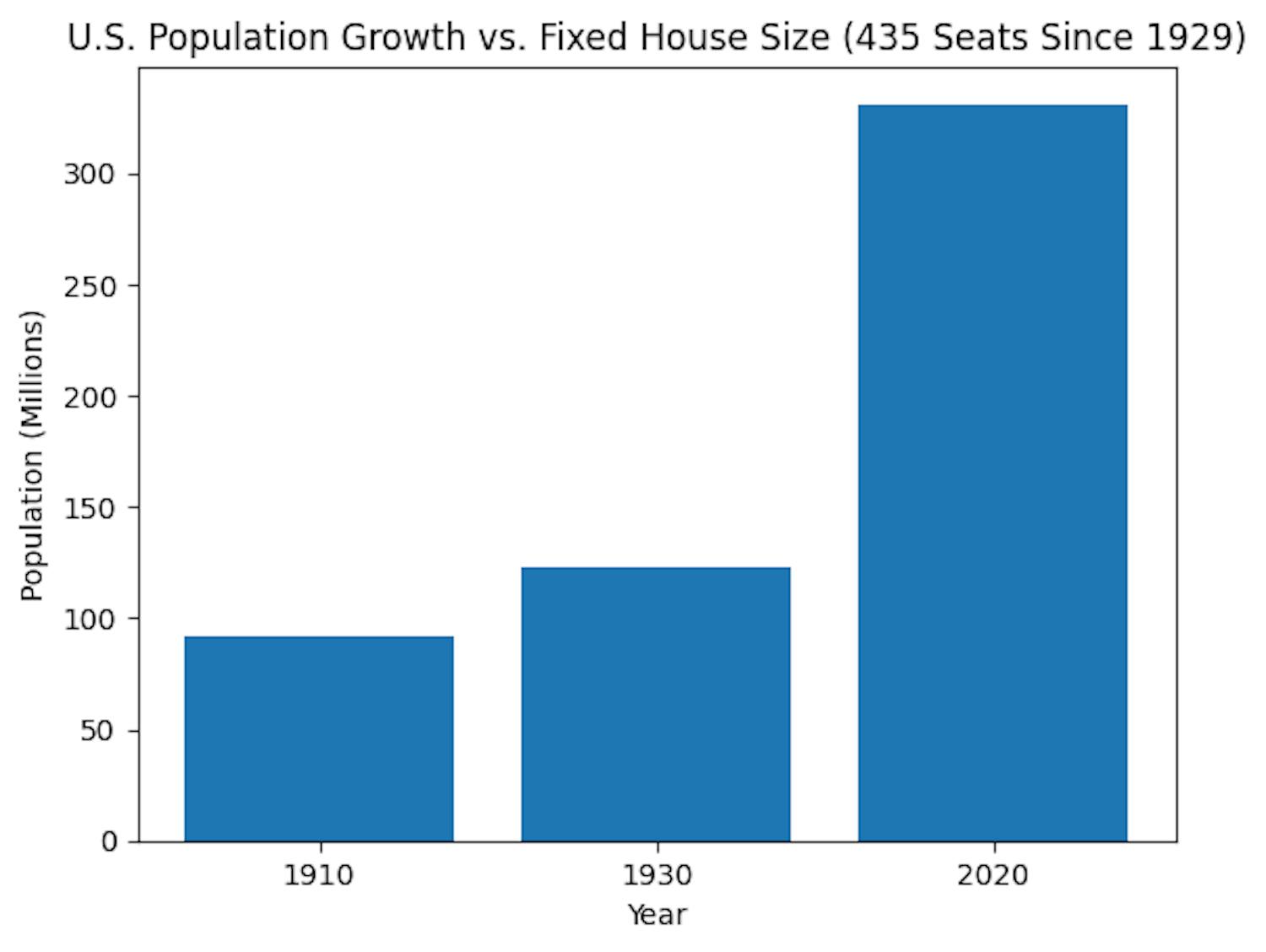
The House size was capped at 435 by the Permanent Apportionment Act of 1929, following disputes over urban vs. rural representation after the 1920 census. Before that, Congress had gradually expanded seats with population growth, but gridlock led to the permanent freeze.
Current Issue:
Today, each representative serves about 760,000 people on average, diluting individual voter influence compared to the Founders’ vision of the House as the “people’s house.” Proponents argue this favors lobbyists and donors over average citizens.
Proposed Solution:
Advocates, like the No Cap Fund, push the “Wyoming Rule,” which would base seats on the smallest state’s population (around 580,000 per district), potentially expanding to 574 seats. This could improve responsiveness without a constitutional amendment, though Congress must approve changes post-census.